Thursday, May 24, 2012

The Women of 1975: Florinda Bolkan

Foreword: A special thanks to my partner-in-crime, Alex of Alex In Movieland, for getting his hands on this rare film for me. 


Florinda Bolkan in “A Brief Vacation”

Grade: ****


An actress I was previously unaware of, Brazilian star Florinda Bolkan caused quite a stir on the continent in 1975, as a downtrodden wife in Vittorio De Sica’s “A Brief Vacation.” A moderate success for De Sica, it charts a woman’s recovery from Tuberculosis in the clean air of the Italian mountains, comfortably away from her demanding husband, mother-in-law, and seven children. Very much indicative of the era, De Sica’s subject is a woman oppressed by society’s expectations of her, as well as the uncaring strain her family puts her under, falling firmly on the side of sympathy against the trappings of domesticity. Rising to the occasion, Bolkan earned the attention of the Los Angeles and New York film critics groups, who gave her their Best Actress prize and runner-up prize respectively.

Bolkan’s haggard appearance is one of forlorn resignation, her prior beauty evident in the noble structure of her face, but its perplexion discoloured, neglected, and unloved. Her character Clara has all but given up on being able to have a life, and it shows. De Sica zones in on Bolkan a lot towards the beginning of the film, the close-ups exposing the woman’s erratic surges between lethargic acceptance and heightened paranoia, as she crystallises Clara’s realisation on a bus to work that she may have left her child in mortal danger. The moment itself is a severe overreaction, affirming the emotional overdrive this woman is under, deprived of affection and enjoyment, living to work rather than working to live. You don’t have to clamour to establish Clara’s early frame-of-mind but Bolkan doesn’t quite hand it to you on a plate: hers is a fraught, lived-in impression of depression-through-routine, and it really works for establishing a connection to the character.

When Clara retreats to the mountains  and falls for love interest Luigi, the film gets a little bland and boggy in illustrating the couple’s tentative relationship. The casting of actor Daniel Quenaud as Luigi, however,  reads as a smart move, his anonymity as a presence quelling any sense of perspective for us but Clara’s, and encouraging Bolkan to further internalise the bubbling joy from this fresh dilemma. The script feels more insistent to implore a clearer sense of Clara’s love than Bolkan, who admirably resists telegraphing her affection as a foolhardy infatuation. The ever-present conscious of a former life floating within the confines of her performance, Bolkan maintains a steely inner crust until the final sequence of the film, where De Sica’s vicious circle crests to completion.


Accolades: Los Angeles Film Critics Association, Best Actress

                   New York Film Critics Circle, Best Actress (Runner Up)

Monday, May 14, 2012

Review Catch-Up: The Avengers/Mirror Mirror/21 Jump Street

(On behalf of whoever created the posters for these three films, I apologise.)


The Avengers
Directed by Joss Whedon
Starring: Robert Downey Jr., Mark Ruffalo, Chris Evans, Chris Hemsworth, Scarlet Johansson
Grade: C+

The word is ‘shattered.’ Buildings shattered; Glass shattered; Box-office shattered, and by the time “The Avengers’” forty-minute climactic action sequence had finished, I was shattered too. By now its name has already been etched in the record books, and this comic book adaptation (only the third of Marvel’s six that I’ve seen) remains the film on everybody’s lips. Perhaps it shouldn’t be a pleasant surprise that the Whedonian (?) humour hits really well, mocking each of the super hero supergroup for their faults – the impulsiveness of the Hulk; Captain America’s coveted sense of nobility; Iron Man’s artificiality, and Thor’s ancient outlook – and really uniting these characters as a force worth rooting for.

But while “Serenity,” with its pulsating, Western-plucked conceit felt as if an entire geographical landscape was waiting for its band of soldiers, “The Avengers” has a portal and a cube – neither of which, it seems, has a consistent, discernible function. The lazy plotting extends to villain Loki (Tom Hiddleston camping it up in a fresher mode than his lazy Snow King turn in Thor), whose motivations for wreaking havoc on the Earth are vague, and his cunning master plan the very essence of cautious passive aggression. All of this casts doubt on whether Whedon and cast have earned an extended finale, which bears more commonalities with the Transformers series than many are willing to admit. He has already proven again this year that he can be at the head of an excellent genre movie; Hopefully when people look back on 2012, they’ll realise “The Avengers” isn’t it.

Mirror Mirror
Directed by Tarsem
Starring: Julia Roberts, Lily Collins, Armie Hammer
Grade: B

If the upcoming “Snow White and the Huntsman” looks to be the gothic offering cornering moody teen girls, “Mirror Mirror” is its distant, eager relative, hopscotching through the Grimm brothers’ tale with keen, cynical aim. Julia Roberts’ Wicked Queen never once directly asks her pithy magic mirror who the fairest of them all is, but this update of the story is still strenuously camp, with Armie Hammer’s Prince dashing around with the crazed aimlessness of James Marsden’s Prince Charming in “Enchanted” (with considerably funnier results) and the late Eiko Ishioka’s awesome costumes putting a fairytale spin on Euro-royal court attire.

“Mirror Mirror” is essentially a revisionist piece, but doesn’t overhaul this legendary story, giving Snow White added motivation, a stronger sense of self-sufficiency, and an active role in cultivating her own happiness, but still promoting an ideology which sees beauty as a product of one’s own personality as much as their external appearance. In part a reaction to this narrative formula remaining so ingrained within artifacts of popular culture, “Mirror Mirror” opts for shapeshifting (and yes, admittedly conservative) juxtapositions of setting, pitting dark wildnerness against candy-cane domesticity to arresting, delightful results. With derisive reaction to “The Cell” and “The Fall,” Tarsem is fast becoming the most criminally undervalued auteur among critics. You can add “Mirror Mirror” to that list, too.

“21 Jump Street”
Directed by Starring: Channing Tatum, Jonah Hill, Ice Cube
Grade: B -

In an era in which a film like “The Hangover” is regarded as a bastion of the young male community, it’s difficult to whip up excitement for a studio’s latest round of boysy humour. Were it not for the overly positive word from writers I respect and admire, I wouldn’t have even chanced “21 Jump Street,” the latest past-it TV series to get a big screen adaptation, but as it happens I’m pleased that I did. A story of two young men separated by high school hierarchy but united in later life through their desire to join the police force, “21 Jump Street” quickly asserts the strengths and weaknesses of its pairing of Channing Tatum and Jonah Hill, who, as best buds, are forced to go undercover as students, and assigned the task of infiltrating a network of drug suppliers at a local high school.

“21 Jump Street” still resorts to generate comedy from familiar stereotypes and cliches, such as the duo’s strict African-American police chief (a periodically funny Ice Cube), who grasps at any opportunity to poke fun at the duo, and one particular drug-induced sequence which affords Hill and Tatum the opportunity to go all-out. What’s refreshing about the approach of the film towards masculine inadequacy is that intimacy and feelings aren’t dismissed as a form of weakness. “21 Jump Street” uses physical comedy between the two in a way which feels harmlessly awkward rather than a grotesque form of homophobic paranoia. These friends are comfortable with each other’s flaws and generally aware of where to draw the line between jovial teasing and outright cruelty, and consequently the humour comes off as more balanced and honest than abrasive slinging of insults potentially would have. This film may not be revolutionary, but it’s one of the most valuable cinematic depictions of ‘bromance’ yet.

Friday, May 04, 2012

The Women of 1975: Katharine Hepburn

Katharine Hepburn in “Rooster Cogburn”

Grade: *

While Henry Hathaway’s “True Grit” was the film which landed a career Oscar for Western stalwart John Wayne it wasn’t coveted by all, so when a repeat outing for Wayne’s barmy Marshall character Rooster Cogburn was announced in 1974, it raised more than a few eyebrows. Naming the sequel after Cogburn himself, and casting Katharine Hepburn as the Christian puritan opposing his every reckless vice, the film recalls the premise of John Huston’s “The African Queen,” in which Hepburn also played an uptight missionary facing off against a whisky-swilling renegade. It didn’t have nearly the same success as “Queen,” instigating mixed notices from critics and only mild awards buzz for the then-68 year-old Hepburn. 

 The overwhelming hurdle for “Rooster Cogburn” (and indeed Rooster Cogburn himself) is that the film expects us to find worth in spending time with this character, whose alarming ideology reveals a cutthroat attitude towards political justice and becomes the film’s coup-de-grâce towards dismantling pacifism. Wayne’s maverick drunkard offers far less nuance than Humphrey Bogart famously procured but Hepburn is still required to dish out a mix of ethical disdain and mild fascination in response to the incompetence of her co-star, undergoing a journey which sees her actively engage in violence as a necessity despite being firmly opposed to it as a solution. 

As Mattie Ross’s noble mettle becomes less and less convincing in “True Grit” (and that goes for either version) so too does Hepburn as Eula Goodnight; self-righteous, funny, and, yes, spirited, in the fiery, en garde manner which only she can really muster, but discouragingly disciplined in the way that she haughtily observes the ruckus around her, rather as if it’s an extension of having to slum it with a film and character below her abilities. Wearily resigned to being the sidekick with the arc, Hepburn offers little in the way of incisive backstory, content to ride alongside Wayne while the makeshift fortifications of her moralistic crusader easily crumble.

Sunday, April 22, 2012

The Women of 1975: Faye Dunaway

Faye Dunaway in “Three Days of the Condor”

Grade: **


The inimitably glamorous Faye Dunaway was in the peak of her career in the mid 1970s, having just received a second Oscar nomination for Roman Polanski’s “Chinatown,” and thus awards attention for a glorified Supporting role in commercial and critical success “Three Days of the Condor,” isn’t all that surprising. In marrying a Hitchcockian narrative with the world of paranoid espionage, Sidney Lumet’s Cold War thriller heavily relies upon an at-sea Robert Redford to inject dynamism as recompense for limply-constructed plotting. Dubbed the ‘condor’, neither he nor his choice of prey, the fitfully meek Faye Dunaway, express a lasting sense of burden from having been thrust into a dangerous situation together, exhibiting no real chemistry or dramatic impetus as a pairing.

Dunaway’s artsy Kathy is underwritten, the actress sidelined by the blandness of the script, and the confusion of just what her character is supposed to represent. Is she simply a responsible citizen compelled by love, or does she fit into the political concerns of the narrative? Honestly, I’ve no idea, and judging by the way that Dunaway approaches this performance; introspectively retreating while pondering the dearth of interest going on around her, hardly helps you to consider Kathy’s position. I suppose there’s a mild pendulous quality to the way that she hangs onto an arc, but moments of clarity, however embedded in Dunaway’s consciousness, fail to reveal themselves.

What makes 1975’s slate of actresses so atypical is that it doesn’t contain a movie star performance, Dunaway’s recognition by the Golden Globes (who else, right?) rendering her the closest member of A-list royalty to breach this category’s shortlist, but unable to convince the Academy that she was worthy of nomination number three. Rest assured that they got this one right.

Accolades: Golden Globe Nomination (Best Actress in a Leading Role, Drama)

Saturday, April 21, 2012

Review: GONE

Gone
Directed by Heitor Dhalia
Starring: Amanda Seyfried, Jennifer Carpenter, Wes Bentley, Daniel Sunjata
Grade: F


While some may be trembling violently at the prospect of girl-next-door Anne Hathaway donning a cat suit this summer, the choice of Hathaway as a feline villain will likely fail to eclipse the misjudged casting of Amanda Seyfried in “Gone.” Regardless of the absurdist, rollicking action in Jaume Collet-Serra’s “Unknown” its star Liam Neeson at least appears to be bordering on recognising the parodic nature of his career pattern. Seyfried, admittedly neither experienced enough to be able to approach self-reflexivity nor to recognise the hilarious flaws of this similarly deranged, icy thriller, treats the text as seriously as cancer and is duly punished.


Even with the thankless task of humanising a woman incapable of listening to any form of rationale, Seyfried expresses the tremulous urgency of her character’s tricky predicament with the mannered impulses of a recovering junkie, itchy for their methadone and unreasonably pushy in hastening its arrival. In reality – or the vague semblance of it existent in “Gone” – what Seyfried’s Jill really wants is answers: Who is the serial killer who tormented her over a year ago? Where is he now holding her sister captive? While “Untraceable” scribe Allison Burnett handily suggests Jill’s angst may be attributed to the trauma of her kidnapping and subsequent mental breakdown, she also asserts that cops merely sit around drinking coffee and chortling at the pained ramblings of hysterical teenage women, and are content to dismiss the girl’s theories about her sister’s disappearance as mere paranoia.

In spite of attempts to represent Jill as a potentially wronged heroine, as a viewer it’s extremely difficult to establish an allegiance to her, the easiest move being to side with the patronising naysayers observing Seyfried’s vigilante-destined-to-be-cat-lady histrionics with furrowed brows and utter guffaw. When, less than fifteen minutes after she notices her sibling’s absence, Jill is threatening a random electronics van driver with a gun, our affinity with her becomes compromised, and the subsequent escalation of events only curtails any point of relativity we may have had with the character. In rendering Jill the only source of investigative edge, “Gone” lacks a clear perspective towards an increasingly colourless mystery, consistently lacklustre as a dramatic showcase. It aimlessly wanders, offering peripheral characters with no discernible purpose in furthering the narrative, underdeveloped on paper and malnourished in execution. As the inane decisions continue, one is forced to wonder why a sequence in which Jill bursts in on a gay couple getting down and dirty in their bedroom has made the final cut, rather than a scene exploring her relationship with either her sister, or the case’s chief suspect.

Clearly hoping to evoke the mystery of backstory in “Halloween” and the desperate high-stakes chase evident in “Taken,” Dahlia’s film achieves neither objective, lacking an effective relationship dynamic or strong opposition to justice within its 'Without a Trace' conceit. Severely lacking in fresh ideas for the ‘missing’ thriller sub-genre, its chief claim to fame is coining the term “rapey-eyes,” a phrase the Oxford English Dictionary would be wise to ignore. Audiences should be advised to exercise that same ignorance with “Gone,” and hope for Amanda Seyfried that this represents her “Flightplan” or “Freedomland” amid otherwise distinguished pursuits.

Thursday, April 19, 2012

The Women of 1975: Barbra Streisand

Barbra Streisand in “Funny Lady”

Grade: ***

One of only two actresses ever to be involved in an Oscar tie, Barbra Streisand returned seven years after her triumphant turn as Fanny Brice in “Funny Girl” to reprise the role in its handily-titled sequel “Funny Lady.” Switching up established legend William Wyler for man-of-the-moment Herbert Ross the film unsurprisingly failed to live up to its predecessor, garnering mixed reviews despite a slew of praise for Streisand herself. This sequel is far from terrible, but neither does it evolve Brice’s tepid story into something worthwhile, benefitting from the charm of an assured James Caan, but otherwise a colourful failure. 

While through the course of “Funny Lady” the journey from ‘girl’ to ‘lady’ begins to ring true, Brice is still a dramatic entertainer on and off the stage, and still relatively hopeless in love. Far more primed for the prospect of eventual heartache, Streisand imparts a cynicism in Brice she herself may have adopted in the period between the two films – in which she divorced Elliot Gould – rattling off trademark one-liners with more caustic impact, and much warier in flirtation than her younger portrayal. She and Caan have more chemistry as opposing forces than Streisand mustered with a dull, uptight Walter Matthau in “Hello, Dolly!” because the actress knows how to come across as conservative without alienating the viewer. In many ways Fanny is reckless, but she isn’t the impulsive, thrill-seeking performer of all those years ago, more of a genuine diva these days, tired of trying too hard and blaming everyone else for her misfortune. 

It’s possible that the biggest obstacle for Streisand in “Funny Lady” is that she doesn’t feel ready to be this much of a showbusiness stalwart, where her energetic presence can’t always be put to good use. As an actress who always seems younger than the roles she’s playing, this lady is still a breath of fresh air, but the film doesn’t afford her the showcase of pizzazz that the original required of a debutante motivated and expected to claim everyone’s attention. Streisand’s shtick feels worn here; in part two of a series which has already trod on the juicier aspects of Brice, and which increasingly feels like a soapy episode with nothing else to say about her. This is still great work within the confines of “Funny Lady” itself, but really we’ve seen it all before.


Accolades: Golden Globe Nomination (Best Actress in a Leading Role, Comedy/Musical)

Wednesday, April 04, 2012

The Women of 1975: Diane Keaton

Diane Keaton in “Love and Death”


Grade: ***

Diane Keaton’s third teaming with Woody Allen in as many years finally provided her with a role seriously discussed in terms of awards, as a disloyal Russian aristocrat in period comedy “Love and Death.” Representing Allen at his most coarsely cynical, “Love and Death” is laden with anachronistic pop-culture references, stand-up style quips and slapstick humour, provided largely by Allen himself as a counter-punch to the absurdity of Russia’s stuffy political history. After a pedestrian effort like “Midnight in Paris” it’s rather welcome to reflect on Allen in his less mature days as a filmmaker, in which Diane Keaton’s grasping ambition as a young actress lended itself well. 

The villainous, independent nature of Keaton’s Sonja at least gives her a foothold towards securing the attentions of the gazing public, the only remotely significant female character of “Love and Death,” and by far its chilliest representation of Russian nobility. The way in which she appears at once contemplative, and then brazenly dismissive, teases Allen’s lovestruck Boris into false hope – both of a union, and that she might possess an inkling of compassion. As a comedic device, this meshes well with the instinctively shallow aspects of Sonja; her thirst for male attention, tendency to commit too early, and her unashamed promiscuity. A satirical embodiment of what the most famous (or infamous) women in history are famous for – sleeping around – Sonja allows Keaton to use her quirks as an actress, transforming the character’s standoffishness into a dry outlet for humour .

Tuesday, March 20, 2012

The Women of 1975: Marilyn Hassett

Marilyn Hassett in “The Other Side of the Mountain”

Grade: ***

1975’s equivalent of “The Blind Side,” “The Other Side of the Mountain” was the film with the six-figure budget which produced over $35m at the U.S. box office ($140m+ in today’s climate), giving a leg-up to the already baity Marilyn Hassett in its principal role. The story of Jill Kinmont, a world-class skier paralysed in an accident, the film is incredibly dated, positively oozing with fromage, but nevertheless exhibits the biopic hallmarks associated with nominated films and performers. The cheap production values of this tearjerking venture perhaps crippled (if you excuse the term) the credibility of Hassett, whose own reviews were far more handsome than that of the film itself, leading to the sort of scepticism which led Vincent Canby of the New York Times to advise, “Load up on handkerchiefs and leave your wits at home.” Despite the derision, it didn't prevent the paper from proclaiming Hassett the frontrunner for the Oscar.

From a film in which we’re supposed to find a woman picking up a potato chip emotionally wrenching, Hassett predictably can’t allay the heavy-handedness of the script or direction, but her natural presence certainly helps to strengthen the emotional centre of this overtly tragic tale. She engenders herself to the audience through an ease of compassion towards others (even as she is often the figure most deserving of it), and furrows identification without feeling too much of a victimised pawn of the proceedings. When Jill loses physical capabilities, Hassett presents her mental strength as a façade without suggesting this woman is broken. She’s insecure and uncertain at pursuing career and romance goals post-accident, but in possession of the inclination to confront them, rather than retreat or hide. 

While it's easy to scoff at everything "The Other Side of the Mountain" has to offer, Hassett’s is a far more nuanced performance than you’d expect from such a staunchly biographical drama, limited in gears but, at its heart, well devised.


Accolades: Golden Globe Nomination (Best Actress in a Leading Role - Drama)

Wednesday, March 14, 2012

The Women of 1975: Anne Bancroft

Anne Bancroft in “The Prisoner of Second Avenue”

Written on the 37th anniversary of the film's theatrical release!

Grade: ** 

Without being so curt as to suggest the “change” was responsible for Anne Bancroft’s acting choices in her later career, there was a distinct period in the 70s where – whether artistic, hormonal, or otherwise – Bancroft made the transition from a sultry crowd-pleaser to a wiry nag. Having thrived upon the rarity of a sexualised ‘older’ woman role like Mrs. Robinson, Bancroft’s work in the following decade rested upon turns such as her bitter, ageing harridan in Herbert Ross’ “The Turning Point,” and as Edna Edison in 1975’s “The Prisoner of Second Avenue.” 1975 was a significant year for Bancroft; she received a BAFTA nomination for the Neil Simon-penned Prisoner,  and was also starring in “The Hindenburg,” the year’s big Christmas blockbuster about the disaster of the same name.

If forty-eight – the age at which Edna’s husband Mel (Jack Lemmon) makes the descension from a working professional into a mental basket case – is the point in life where a man starts exhibiting signs of Pernickety Old Codger Syndrome, then someone please shoot me at forty-seven. I recently remarked upon Neil Simon’s uncanny habit of writing both winners and turkeys, as his penchant for layered characterisation and witty dialogue is frequently countered by laborious storytelling and neurotic drivel. The case leans decidedly towards the latter here, as his geriatric script leaves Bancroft to buffer Lemmon’s interminable complaints with perplexed frustration for the first half of the film, and doesn’t require her to do anything else until it’s rendered Mel doolally, as well as annoying. With a vague arc to work with, Bancroft offers a welcome, alternate brand of disillusioned Manhattanite from the masculine inadequacy of her other half, keenly interpreting Edna’s foolishly hopeful outlook on city life as a product of renewed independence rather than an enforced enthusiasm designed to prop up her Mr. Edison. But what to do with a half-rotten apple of a script? She does about as much as most would: reacts uneasily, gamely has a chomp, and then casually tosses it away.

Accolades: BAFTA Nomination (Best Actress in a Leading Role)

Tuesday, March 13, 2012

The Women of 1975: Marthe Keller

Marthe Keller in “And Now, My Love”

Grade: ****


A vaguely-plotted, two-and-half-hour black and white film, Claude Lelouch’s “And Now, My Love” clearly had an ardent fanbase in 1975, a year championed by many as a standout for cinema. Not only did the Los Angeles film critics single it out as the Best Foreign Language film of its year, the Academy itself surprisingly recognised it in the Original Screenplay category, alongside such powerhouses as “Dog Day Afternoon,” “Shampoo,” and “Amarcord.” Having gotten Anouk Aimee a Best Actress nomination in 1966 for “A Man and a Woman,” Lelouch may have been regarded as the Bryan Forbes or James L. Brooks of the period, inevitably leading to cries of ‘Oscar nomination!’ for the film’s principal performer and stunning beauty Marthe Keller.

The reality is that, in its sheer audacity as a century-spanning, philosophising cloudbuster of a film, “And Now, My Love” doesn’t showcase Keller in the way that potential Best Actress nominees often need to be, picking up and dropping actors in order to declare its ideas, coherent somewhere down the line but otherwise ethereal and restless. It’s a wonder that her performance marries so well with the artful concerns of Lelouch’s Godardian exploration of political and existential woe, her character Sarah (the third generation of a three-pronged role for Keller) fickle in matters of love and battle, cascading through emotional octaves with erratic, naturalistic impulse.

Amidst the historical commentary Keller focalises Sarah’s struggle to maintain a sense of challenge in her life, momentarily grounding the meta aspects in her playful, enigmatic flirtations and pouty ignorance. She manipulates the ambivalence of the character to contradictarily suggest that she needs attention from Lelouch and the audience, and he handily cuts away from conventional narration when she becomes unbearably idealistic. Keller’s is a curious performance, but one that thoroughly works for “And Now, My Love,” astoundingly correlative to the film’s social odyssey, and a wispy wonder of actressing at its freshest and boldest.

Monday, March 12, 2012

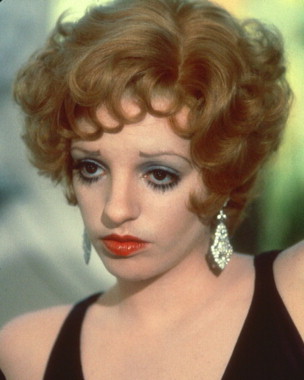
The Women of 1975: Liza Minnelli

Liza Minnelli in “Lucky Lady”

Written on the occasion of Liza Minnelli's 66th birthday!

Grade: **

The real miracle behind Golden Globe-nominated musical “Lucky Lady” is that 20th Century Fox managed to convince Oscar-winning actors Minnelli and Gene Hackman to star, and legendary director Stanley Donen to direct. A bizarre amalgam of a musical ménage-a-trois and a seaboard action adventure, this shamelessly marketable piece of dross also enlisted the talents of Burt Reynolds to complete the trio of rum-running mavericks, who engage in booze-fuelled orgies and high-speed chases in prohibition-era Mexico. A leading lady in another musical, Minnelli is a performer I find it easy to succumb to idolatry with. Whether effervescently youthful in “The Sterile Cuckoo,” a wondrous entertainer in “Cabaret,” or simply wrenching in “New York, New York,” she is able to colour her persona to incorporate the insecurities of her characters, immensely watchable as a physical performer and yet rich beneath the surface, too.

The character of Emma in “Lucky Lady” is a conceited, reckless heroine, which Minnelli conveys through early admonishment of both men. Her greed is evident through faithless femme-fatale like scepticism, and you often sense that Emma is one temper away from going her own way completely. Is she simply a ruthless smash-and-grab merchant or is this a sinister form of self-preservation? The jury’s out. Minnelli may bring a reliably strong presence to Emma, but in doing so retreads the familiar Sally Bowles position of being in the middle of a 3-way relationship, in a film with a completely different tone to “Cabaret” and Bowles, whose motivations lie in impulse and hedonism. It’s difficult to approach “Lucky Lady” and Emma in the same vein, since the devotion to plot-based elements such as the action set-pieces, at the expense of exploring the emotional ambiguities within the three-way relationship, limit the conclusions that we can generate from her actions. There aren’t the scenes here to give Minnelli the flavour of opportunism that courses through her wilful character, but she wrestles with it anyway, to mixed, scene-stealing results.


Accolades: Golden Globe nomination (Best Actress in a Leading Role - Musical or Comedy)

Sunday, March 11, 2012

The Women of 1975: Stockard Channing

Stockard Channing in “The Fortune” 

Grade:
*  

As an heiress duped by A-list money-hungry fellas Jack Nicholson and Warren Beatty, Stockard Channing’s Oscar buzz surely stemmed from the novelty of her “Introducing” tag. This was her debut performance on film (in a Mike Nichols film no less) and so those ‘next big thing’ notices clearly got people talking about her chances at a nomination in a fractured year. Evidently regarded as not quite ready for the big time in 1975, it’s possible that she was undone by the film’s spring release, or simply that –as we’ve learned—AMPAS don’t always warm to performers in the way that you expect them to. It took Channing another eighteen years after this performance to grab that elusive nomination, in an adaptation of John Guare’s stage play, “Six Degrees of Separation.” 

A passive object of affection and an eventual target for murder, Channing’s Freddie begins as a foolish young woman lured into adulthood, and genuinely excited by the prospect of a world away from her stuffy roots. The early nature of Freddie requires the actress to be goofy and naive in interaction with the two boys,  and her distant, understated degree of passion allays the character's prioritisation of liberation over love. Once those early scenes subside the script feels so unconcerned with Freddie, limiting her to bouts of frustration and muted drunken stupors, and in the only instances afforded to Channing as a platform for her comic chops she ends up coming off as an intensely dislikeable shrew. "The Fortune" evolves into the kind of sprawling crime caper that the Coens would have fun remaking, but Channing's performance suffers when the focus is blurred. This is an Actress I’m generally fond of, but it isn’t difficult to surmise why this particular, heavily-campaigned performer may have tested the patience of Academy members a little too much.


Accolades: Golden Globe Nomination (Debut Performance by an Actress)

Saturday, March 10, 2012

The Women of 1975: Diana Ross

Diana Ross in “Mahogany”

Grade: ***

Already an icon of vinyl and screen, Oscar-nominated success Diana Ross migrated from “Lady Sings the Blues” to another story of a troubled woman in a high-profile profession. Berry Gordy cast her in “Mahogany,” a tale of an aspiring fashion designer who gets entrenched in the world of Italian models and temperamental photographers. The film proved a hit for Ross, but the critics didn’t buy it, unsurprising given that the film plays out as a 70s-era soapy melodrama, and has more parallels to Christina Aguilera’s “Burlesque” than just the pop-star-plays-aspirational-protégé premise.

Ross herself is good in the scenes where the film attempts to emulate the vastly superior “Claudine” from the previous year, geared towards Black social commentary and eventually intent on blaming the world of white fashionistas for turning our heroine into a selfish diva. She often sidesteps the badly-written elements of her character designed to inject dramatic effect into a film without legitimately interesting issues of conflict, and is far better than "Mahogany" itself deserves, deploying Tracy’s inherent independence as both a source of charm and a jarring defence mechanism, lending credence to her character’s many erratic eruptions of frustration and self-righteousness. While not a classic tour-de-force, if you’re looking for performances which significantly benefit their film, look no further than Ross, who, on this display, warranted a lengthier filmography than the one she has now.

Thursday, March 08, 2012

The Women of 1975: Commencement

In 1975 there were many talking points in the world of film: Susan Hayward and Fredric March both passed away; Charlie Chaplin was knighted by the Queen, and Steven Spielberg’s “Jaws” became the highest-grossing film of all time. In terms of Oscar, commentators were enamoured with the Academy’s Best Picture lineup, which, as well as encompassing Spielberg’s film, comprised of “Barry Lyndon,” “Dog Day Afternoon,” “Nashville,” and eventual winner “One Flew over the Cuckoo’s Nest.”

While many regard this lineup as a benchmark for the category, few people seem to feel that way about the five women nominated for Best Actress. A New York Times article from February 1976 perhaps best articulates the discontent felt in quarters, highlighting the dearth of Best Actress contenders from the previous year and listing their many detractors. Titled “Do any of these Best Actress contenders rate an Academy Award?” Judy Klemesrud’s article names twenty women in with a shot of a nomination, ten of whom eventually won a Best Actress Oscar at one time or another.

As most of you have probably gathered, for the past year my quest to see every Oscar nominee in the major six categories has seen the focus shift primarily onto the Best Actress category, and last May I crossed the threshold of one hundred performances left to see. Ten months later, and that figure is now fifty. As part of a celebration of crossing the milestone of fifty Best Actress Nominees left unseen, I’m going to write a profile on each 1975 Best Actress contender recognised by the Times, culminating in a review of the eventual nominees, two of which – Glenda Jackson and Ann-Margret – I have yet to encounter. The other contenders for the Oscar were Isabelle Adjani, Carol Kane, and the anointed Louise Fletcher.

If you haven’t seen the article (as far as I know, it's only available through subscribing to the New York Times website) then I’m going to keep the contenders a surprise until the profiles are posted. Get ready for the women of 1975!

If you’re interested, these are the remaining Best Actress nominees I have left to see: 

1. Ruth Chatterton, “Madame X” (1928-29)
2. Betty Compson, “The Barker” (1928-29)
3. Corinne Griffith, “The Divine Lady” (1928-29)
4. Greta Garbo, Romance” (1929-30)
5. Norma Shearer, “Their Own Desire” (1929-30)
6. *Helen Hayes, “The Sin of Madelon Claudet” (1931-32)
7. Marie Dressler, “Emma” (1931-32)
8. Lynn Fontanne, “The Guardsman” (1931-32)
9. Elisabeth Bergner, “Escape Me Never” (1935)
10. Irene Dunne, “Theodora Goes Wild” (1936)
11. *Luise Rainer, “The Good Earth” (1937)
12. Barbara Stanwyck, “Stella Dallas” (1937)
13. Margaret Sullavan, “Three Comrades” (1938)
14. Olivia De Havilland, “Hold Back the Dawn” (1941)
15. Katharine Hepburn, “Woman of the Year” (1942)
16. Joan Fontaine, “The Constant Nymph” (1943)
17. Greer Garson, “The Valley of Decision” (1945)
18. Rosalind Russell, “Mourning Becomes Electra” (1947)
19. Ingrid Bergman, “Joan of Arc” (1948)
20. Deborah Kerr, “Edward, My Son” (1949)
21. Jane Wyman, “The Blue Veil” (1951)
22. Julie Harris, “The Member of the Wedding” (1952)
23. Leslie Caron, “Lili” (1953)
24. *Anna Magnani, “The Rose Tattoo” (1955)
25. Carroll Baker, “Baby Doll” (1956)
26. Elizabeth Taylor, “Raintree County” (1957)
27. Rachel Roberts, “This Sporting Life” (1963)
28. Sophia Loren, “Marriage, Italian Style” (1964)
29. Elizabeth Hartman, “A Patch of Blue” (1965)
30. Anouk Aimee, “A Man and a Woman” (1966)
31. Patricia Neal, “The Subject Was Roses” (1968)
32. Vanessa Redgrave, “Isadora” (1968)
33. Genevieve Bujold, “Anne of the Thousand Days” (1969)
34. Diana Ross, “Lady Sings the Blues” (1972)
35. Marsha Mason, “Cinderella Liberty” (1973)
36. Ann-Margret, “Tommy” (1975)
37. Glenda Jackson, “Hedda” (1975)
38. Liv Ullmann, “Face to Face” (1976)
39. Geraldine Page, “Interiors” (1978)
40. Ellen Burstyn, “Resurrection” (1980)
41. Jane Fonda, “The Morning After” (1986)
42. Meryl Streep, “Ironweed” (1987)
43. Isabelle Adjani, “Camille Claudel” (1989)
44. Joanne Woodward, “Mr. and Mrs. Bridge” (1990)
45. Bette Midler, “For the Boys” (1991)
46. *Emma Thompson, “Howard’s End” (1992)
47. Mary McDonnell, “Passion Fish” (1992)
48. Miranda Richardson, “Tom and Viv” (1994)
49. Emily Watson, “Breaking the Waves” (1996)
50. Julie Christie, “Afterglow” (1997)

Saturday, February 25, 2012

A Marathon's End: Final Oscar Predictions

Once it gets to this stage of awards season, much has already been decided; winners have already been crowned, and although people may tell you otherwise, the chance of an upset in the major categories is relatively tiny. "The Artist" will win Best Picture and Michel Hazanavicius will win Best Director, and don't let anyone tell you otherwise, primarily because there isn't a legitimate opponent beyond pockets of support for "The Help" and also because it encompasses everything the Oscars stand for: traditional, crafted, and celebratory of cinema.

At this stage, Jean Dujardin losing the Best Actor Oscar would be a massive upset, but Meryl Streep triumphing over Viola Davis probably less of one, given that only one black actress has ever won in the category, and the Academy's long-standing affection for biographical performances. What gives Davis the edge is the popularity of "The Help" -- with audiences, guilds, and many critics -- and the sympathies associated with her character. The Supporting categories look sewn up, since Spencer and Plummer have been cleaning up in all of the precursors.

The screenplay categories look less locked, with "The Artist" and "Midnight in Paris" duelling it out on the Original side, and "The Descendants" facing off against the might of Sorkin and Zailian's "Moneyball" in Adapted. The Best Picture winner usually wins for its script, but I imagine that affection for Woody Allen's crowned comeback will see voters tick the box for his film, which won't win in any other category, and that the sole prize for Alexander Payne's glum Hawaiian adventure will happen here, too, despite it being far less complex or bracing than its main competitor.

Other iffy categories include Best Costume Design, which could represent an Oscar win for Madonna's critically-trounced "W.E," if its win with the Costume Designers Guild translates, but could also easily go to "Anonymous," "Jane Eyre," or three-time Oscar winner Sandy Powell for "Hugo." But I think this prize might go to "The Artist," on the coat-tails of its overall popularity, and for its undeniably well-tailored resurrection of Hollywood's golden age. I'm throwing my hands up where the sound categories are concerned, and wondering whether a bone will be thrown to "The Girl with the Dragon Tattoo," which, with five nominations, is surely a popular enough film to want to reward somewhere. The Visual Effects Oscar rarely goes to a Best Picture nominee, but if "The Golden Compass" can beat "Transformers," I think Martin Scorsese's film can also manage it.

I'm going to justify the possibility of heavily-favoured critical darling  "A Separation" losing the Best Foreign Language Film Oscar to Agnieska Holland's "In Darkness," which has strong holocaust themes (often attractive to AMPAS) and a filmmaker behind it with an Academy-endorsed pedigree. I also think that "A Separation" is at a slight disadvantage with regard to America's strained political relationship with the Middle East, despite the film's internal critique of Iran.

That's all that's left to say, except that, wherever you are tomorrow night, and whatever you're drinking, try not to be too disappointed when your favourite loses. It's often best to treat the Academy's better decisions like a toddler using a potty, or a teenager making their bed in the morning. We're primed for disappointment when they turn around and do something stupid at the next available opportunity. Personally, this set of winners (especially in the acting department) would represent a great list of awardees to me, but it won't please everyone. When Emmanuel Lubezki loses Best Cinematography again, take a leaf out of Norman Maine's book. Stand upright, throw back a drink, and let the waves wash over you.

FINAL OSCAR PREDICTIONS

Best Picture: "The Artist" 

(Alt: "The Help")

Best Actress: Viola Davis, "The Help"
(Alt: Meryl Streep, "The Iron Lady")

Best Actor: Jean Dujardin, "The Artist"
(Alt: George Clooney, "The Descendants")

Supporting Actress: Octavia Spencer, "The Help"
(Alt: Berenice Bejo, "The Artist")

Supporting Actor: Christopher Plummer, "Beginners"
(Alt: Max von Sydow, "Extremely Loud & Incredibly Close")

Best Director: Michel Hazanavicus, "The Artist"
(Alt: Martin Scorsese, "Hugo")

Best Original Screenplay: Woody Allen, "Midnight in Paris"
(Alt: Michel Hazanivicius, "The Artist")

Best Adapted Screenplay: Alexander Payne, Nat Faxon and Jim Rash, "The Descendants"
(Alt: Steven Zaillian, Aaron Sorkin and Stan Chervin, "Moneyball")

Best Foreign Feature: "In Darkness" (Poland)
(Alt: "A Separation" (Iran))

Best Animated Feature: "Rango"
(Alt: "Chico & Rita")

Art Direction: "Hugo"
(Alt: "Harry Potter and the Deathly Hallows Part 2")

Cinematography: "The Tree of Life"
(Alt: "Hugo")

Costume Design: "The Artist"
(Alt: "W.E.")

Documentary Feature: "Hell and Back Again"
(Alt: "Undefeated")

Documentary Short Subject: "Saving Face"
(Alt: "The Tsunami and the Cherry Blossom")

Film Editing: "The Artist"
(Alt: "The Descendants")

Makeup: "The Iron Lady"

Original Score: "The Artist"
(Alt: "War Horse")

Original Song: 'Man or Muppet' from "The Muppets"

Sound Editing: "The Girl with the Dragon Tattoo"
(Alt: "Hugo")

Sound Mixing: "Hugo"
(Alt: "The Girl with the Dragon Tattoo")

Visual Effects: "Hugo"
(Alt: "Rise of the Planet of the Apes")

Short Film (Animated): "The Fantastic Flying Books of Mr. Morris Lessmore"
(Alt: "A Morning Stroll")

Short Film (Live Action): "Tuba Atlantic"
(Alt: "The Shore")

Thursday, February 23, 2012

2011's Individual Standouts

The *best of the best from 2011...

*winners in bold

DIRECTOR

Nuri Bilge Ceylan, “Once Upon a Time in Anatolia”
Ulrich Köhler, “Sleeping Sickness”
Kenneth Lonergan, “Margaret”
Terrence Malick, “The Tree of Life”
Mike Mills, “Beginners”

FINALISTS: Lars Von Trier, “Melancholia”; Steven Spielberg, “The Adventures of Tintin”; Kelly Reichardt, “Meek’s Cutoff"; Bennett Miller, “Moneyball”; Joe Wright, “Hanna”; Oren Moverman, “Rampart”; Andrew Haigh, “Weekend”; Julia Leigh, “Sleeping Beauty”; 

NOTEWORTHY: Ben Wheatley, “Kill List”; Michel Hazanavicius, “The Artist”; Nicholas Winding Refn, “Drive”; Steve James, “The Interrupters”


ACTRESS IN A LEADING ROLE

Olivia Colman, “Tyrannosaur”
Kirsten Dunst, “Melancholia”
Liana Liberato, “Trust”
Anna Paquin, “Margaret”
Michelle Williams, “My Week With Marilyn”

FINALISTS: Adepero Oduye, “Pariah”; Zoe Heran, “Tomboy”; Elizabeth Olsen, “Martha Marcy May Marlene”; Emily Browning, “Sleeping Beauty”; Mia Wasikowska, “Jane Eyre”; Charlize Theron, “Young Adult”; Kristen Wiig, “Bridesmaids”; Viola Davis, “The Help” 

NOTEWORTHY: Felicity Jones, “Like Crazy”; Keira Knightley, “A Dangerous Method”; Robin Wright, “The Conspirator”; Felicity Jones, “Chalet Girl”; Charlotte Gainsbourg, “Melancholia”; Meryl Streep, “The Iron Lady”; Saoirse Ronan, “Hanna”; Elena Anaya, “The Skin I Live In”


ACTOR IN A LEADING ROLE

Woody Harrelson, “Rampart”
Ewan McGregor, “Beginners”
Chris New, “Weekend”
Brad Pitt, “Moneyball”
Owen Wilson, “Midnight in Paris”

FINALISTS: Jean Dujardin, “The Artist”; Michael Shannon, “Take Shelter”; Tom Cullen, “Weekend”; Matthew McConaughey, “The Lincoln Lawyer”; Gary Oldman, “Tinker, Tailor, Soldier, Spy”; Peyman Mooadi, “A Separation”

NOTEWORTHY: Jean-Christophe Folly, “Sleeping Sickness”; Pierre Bokma, “Sleeping Sickness”; Michael Fassbender, Shame”; Brendan Gleeson, “The Guard”; Neil Maskell, "Kill List"; Mel Gibson, “The Beaver”; Steve Carrell, “Crazy Stupid Love”; Rob Brydon, “The Trip”; Bill Nighy, “Page Eight”


ACTRESS IN A SUPPORTING ROLE

Jeannie Berlin, “Margaret”
Melanie Laurent, “Beginners”
Lin Dan Pham, “Adrift”
Vanessa Redgrave, “Coriolanus”
Robin Wright, “Rampart”

FINALISTS: Brie Larson, “Rampart; Sareh Bayat, “A Separation”; Maria Doyle Kennedy, “Albert Nobbs”; Jessica Chastain, “The Help”; Melissa McCarthy, “Bridesmaids”; Claire Sloma, “The Myth of the American Sleepover”; Janet McTeer, “Albert Nobbs”; Pernell Walker, “Pariah”

NOTEWORTHY: J. Smith Cameron, "Margaret"; Cate Blanchett, “Hanna”; Sarah Paulson, “Martha Marcy May Marlene”; Emma Stone, “Crazy Stupid Love”; Louise Harris, “Snowtown”; Shailene Woodley, “The Descendants”; Jessica Chastain, “The Tree of Life”; Gwyneth Paltrow, “Contagion”; Kim Wayans, “Pariah”;


ACTOR IN A SUPPORTING ROLE

Bruce Greenwood, “Meek’s Cutoff”
Daniel Henshall, “Snowtown”
Nick Nolte, “Warrior"
Christopher Plummer, “Beginners”
Michael Smiley, “Kill List”

FINALISTS: Muhammet Uzuner, “Once Upon a Time in Anatolia”; Brad Pitt, “The Tree of Life”; Albert Brooks, “Drive”; John Hurt, “Page Eight”; Tom Hardy, “Tinker, Tailor, Soldier, Spy”;

NOTEWORTHY:  Jonah Hill, “Moneyball”; Philip Seymour Hoffman, “The Ides of March”; Shahab Hosseini, “A Separation”; Shea Wigham, “Take Shelter”; Bobby Canavale, “Win Win”; Ben Kingsley, “Hugo”; Paul Giamatti, “The Ides of March”; Kieran Culkin, “Margaret”

Friday, February 17, 2012

Review: The Innkeepers (2012)

THE INNKEEPERS
Directed by Ti West
Starring: Sara Paxton, Pat Healy, Kelly McGillis
Grade: C+


Ti West’s burgeoning cult status as a palatable, back-to-basics horror auteur is tried and tested again with “The Innkeepers,” an original script penned by West himself, one which feels like an apotheosis of the ghost story novella. West's well-regarded “House of the Devil” recalled the sinister machinations of Hammer Horror, bringing with it the trepidation of a playful myth growing into a perilous, inescapable reality. It may seem as if we see these stories told regularly, but never in so pure and devotedly emulative a form as in West’s odes to a bygone era, his approach proffering chills borne of simple visual techniques and a sense of storytelling skill absent from the conventions of the popular Gorenography and Docu-horror sub-genres. His methods borrow more from the moralistic fiber and literary modesty of HBO’s “Tales from the Crypt,” not overtly camp but indebted to Stephen King’s slow-burn tendencies.

Of the many interdictions associated with haunted house spooks, the world of fictional horror stresses that, when a character messes with artifacts of cultural or traditional value, coaxing dead spirits from their slumber for kicks, thrills or an ego boost, this is akin to a death wish. While the premise of “The Innkeepers” doesn't quite go as far as stating that the foreclosed property’s owners are paving paradise to put up a parking lot (the Yankee Pedlar Inn itself is grubby, low-rent, and unmemorable), the building’s infamous history remains a key focal point for Claire (Sara Paxton) and Luke (Pat Healy), the two staff entrusted with running this grotty, decaying hotel through to its imminent demolition. Predictably, this becomes a tougher task than merely flashing a smile and reaching for a room key, as, together with a past-prime actress convinced she has psychic abilities ('80s pin-up girl Kelly McGillis), the occupants confront the spirits intent on seeing the hotel’s final days out with a bang.

As proven by Sam Raimi’s “Drag Me to Hell,” the horror genre doesn’t necessarily require its heroines to be likable—or the fate of their battle for survival even vital—to assert a compelling narrative. Casting Paxton as the central character Claire has mixed results, her slip-of-a-thing dudette demeanor working with West’s derision of the paranormal amateur as foolhardy and entirely worthy of punishment, but otherwise flimsy as the film’s figurehead. Claire’s own personal hangups are touched upon in a scene where McGillis’s Leanne berates her on the insignificance of her life goals—to which Paxton’s bizarre reaction resembles the look of a pre-pubescent boy, had you just told him to turn his X-Box off and go to bed—but West fails to provide a foothold for this character within the dramatic framework, restricting an element of an arc or parable for Claire that feels needed to strengthen a lack of overall intensity.

West’s slow-burn approach is unsettling, but the suspense is strenuous in execution, “The Innkeepers” admirably resisting shock tactics until the gruesome horror of its final third, but nevertheless meek as a dramatic showcase. Much more concerned with existential bleakness, the film’s power of suggestion is valuably evident in the way in which it represents transition (of idealism-realism, fame-obscurity, and life-afterlife) through the suspended status of its setting, and an inherent uncertainty in the characters about their future. And it's all the more impressive for the ease with which it escapes parodic, self-conscious schematics, detailing the confluence of skepticism and curiosity in these people, successfully blending personal losses with the grander death of heritage through a tangibly crumbling aesthetic.

The literary feel of the film extends to an epilogue, in which dramatic about-turns threaten to arise but never quite make it into West’s heady denouement. It’s an indicative failure of this budding filmmaker’s inability to commit to the interesting beats of the narrative, or capitalize upon a genuinely intriguing setup. As it stands, there’s little to unravel in “The Innkeepers” but much to absorb, its strikingly astute genre mechanics a fundamental qualification of competence and direction. So why does it feel like such a missed opportunity? Say what you will for the allure of supernatural terror; here it gives way to the fear of empty existences and lonely corridors, a somewhat chilling prospect for a paranormal thriller, but hardly the bombastic feature that would make “The Innkeepers” crucially memorable. Like a navigating spirit, it remains largely anonymous, and West’s quest for his own horror classic lives on.